
Every so often, in up-and-coming neighbourhoods full of progressive metropolitan types, a group of community-minded idealists will set up a restaurant where diners pay what they feel their meal is really worth, rather than anything as capitalist or bourgeois as a preset price.
They don’t last long, of course. The number of right-on diners willing to pay over the odds for a bowl of made-with-love artisanal oatmeal is always lower than those who either dine-and-dash, or who honestly but severely underestimate the costs of running an eatery.
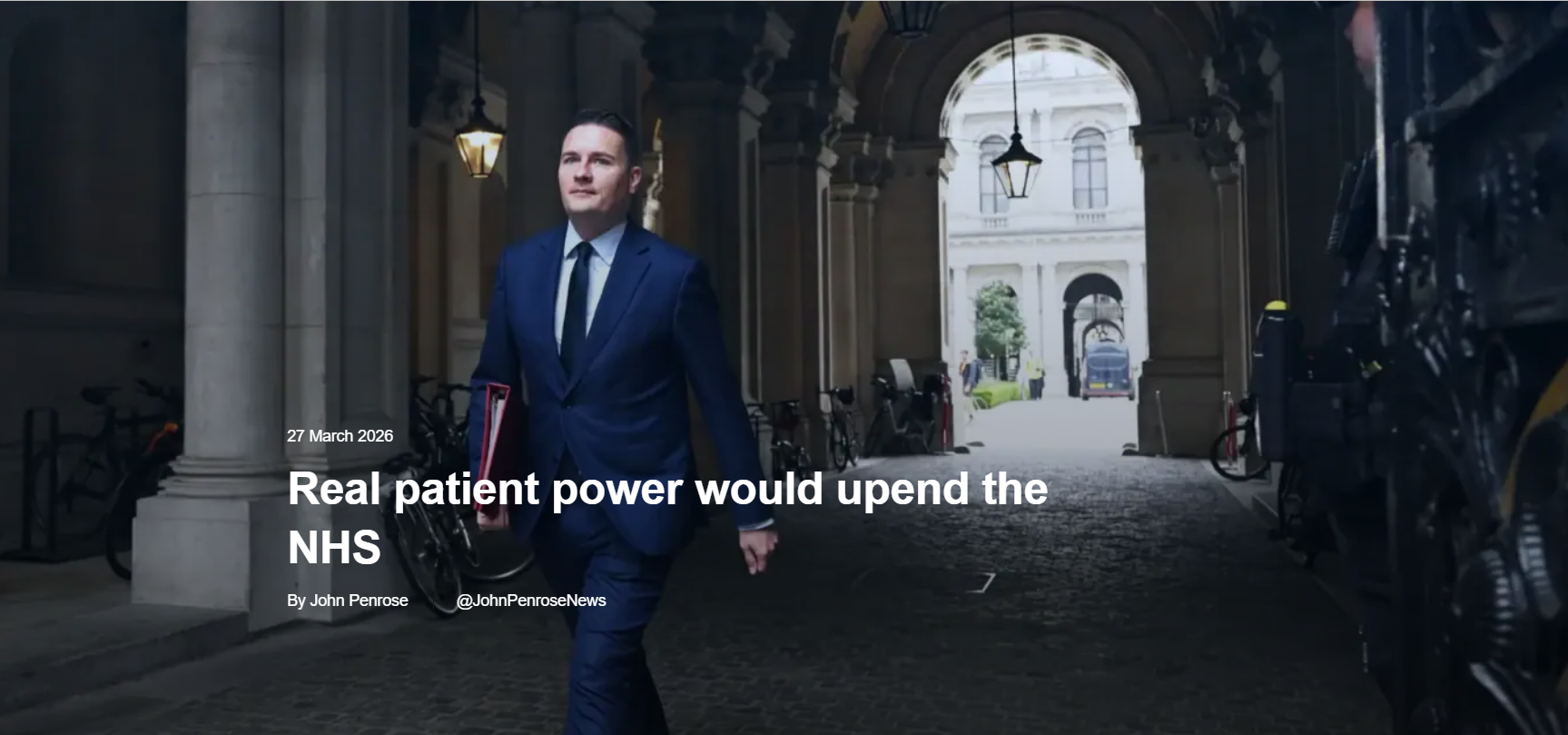
Yet now it’s the turn of the NHS. A new Patient Power Payments system will ask patients if they’re happy with their NHS treatment and, if not, money will be docked from the hospital responsible. Health Secretary Wes Streeting is, rightly, starting with long-running problems in women’s healthcare, saying ‘I’ll be giving women the power to kick medical misogyny where it hurts: the bank balance.’
Like the idealistic eateries, it’s a lovely idea in theory. But with public trust in the NHS still only slightly above its recent all-time low, and yet another round of doctors’ strikes just announced this week (yes really) the crucial question is: will it work in practice?
Sadly, the omens aren’t good. Lots of NHS problems are caused by delays and barriers that stop patients getting treated in the first place, on everything from ambulance arrival times to getting a GP appointment, rather than by shoddy care once they’ve finally got through the front door. The same goes for after-treatment care, where mistakes and delays mean patients either relapse back into hospital even though their initial visit went well, or can’t live independently because their recovery isn’t as complete as it should have been. So if Wes Streeting wants his shiny new scheme to work properly, he needs to make sure it looks under lots of other, different rocks as well.
The track record of other pay-for-performance government schemes isn’t great either. The Civil Service introduced one for Whitehall mandarins over a decade ago, and now grade inflation means lots of them get cash bonuses while Ministers and taxpayers fume that nothing works properly anymore. If the medical establishment does the same with Patient Power Payments, in a few years it will have become a quaint and costly piece of pointless bureaucracy: another layer of red tape in a service that’s already heavily and expensively inspected by dozens of different regulators, rather than anything that makes a difference.
In spite of all this, the underlying idea behind Patient Power Payments makes sense, in a good-on-paper kind of way. It’s the same idea that sits behind Martha’s Rule which gives patients the right to a second medical opinion if things aren’t going right, and which is already making a difference and saving lives.
So Wes Streeting is onto something important, even if his current answer looks more like Labour Party leadership manoeuvres than a serious attempt to fix stubborn long-term NHS failings that might otherwise be ignored or covered up.
Could the underlying idea of patient power drive genuine improvements across the NHS? Yes definitely, but only if the Government gives the idea its head. If Martha’s Rule saves lives and improves care by giving patients the right to a second opinion, why stop there? Patient power could be so much more than just a bureaucratic complaints process with slightly sharper teeth, and become a guiding principle that guarantees patients lots more choices within the NHS.
The simplest, strongest change would be to split Wes Streeting’s Department of Health into four rival mini National Health Services, and give patients the power to choose whichever one was best.
The effects would be profound, because you and I and our families wouldn’t have to accept whatever healthcare we are offered anymore, especially if it wasn’t very good. If our current mini-NHS has worse waiting times for a particular treatment we need, or doesn’t offer online appointments while we’re at work when the others do, or can’t offer an NHS dentist nearby when the others can, then we would be able to choose a better service instead.
Patient power is a genuinely big, important idea that could dramatically improve every part of the NHS. If Wes Streeting is serious about it, he should take the gloves off and do it properly.
If you like this idea, you’ll find more details, soundbites and rebuttals about it under A Better NHS in the Policy Thumbnail section of our website
This article is the latest in a fortnightly series of policy proposals published in CapX from John Penrose and the Centre for Small State Conservatives.
Leave a Reply