
In his Sunday Telegraph column, journalist & commentator Liam Halligan name-checks John & supports a Sovereign Wealth Fund
This is a before and after moment in the Middle East. We’re in the early stages of a profound recalibration – which could last months.
Amidst the humanitarian fallout, the economic impact of US airstrikes on Iran, and the Islamic Republic’s region-wide retaliation, is also huge – not least for the UK.
This is because Britain, as a highly indebted, net energy importer, is vulnerable. Clear evidence of that vulnerability can already be seen.
Over the last week, the price of Brent crude has surged from $72 to $90 a barrel, a 25pc increase. Since mid-December, as the geopolitical heat has risen, oil is up 53pc. And over recent days, the price of wholesale UK gas has doubled.
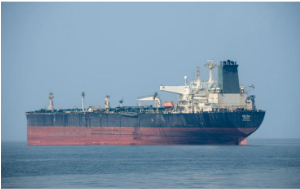
The Strait of Hormuz – route to a quarter of global oil and gas flows – is plagued by Iranian mines and drones, with a desperate Tehran determined to keep Saudi oil and Qatari liquified natural gas (LNG) from world markets. Serious analysts say crude could hit $200 and beyond.
North Sea oil and gas production has cratered over recent years, not least because of the insanely punitive taxation by both Tory and Labour governments. Thanks to net zero virtue signalling, the UK now imports almost half its energy – a record high and projected to go much higher.
When energy prices spiral, that hammers our trade balance, weakening sterling, making imports even more expensive. But that’s just one aspect of Britain’s vulnerability to sky-high oil and gas.
First, there are the higher petrol and utility bills faced by households. Britain generates two fifths of its electricity from wind and solar but don’t believe the “cheap renewables” hype.
The marginal pricing system underpinning our rigged electricity market means the most expensive energy source needed to meet demand – almost always gas in the UK, precisely because it takes up the slack for intermittent renewables – sets the price for all types of electricity.
And electricity generation is anyway, only a third of the UK’s total primary energy use. Over 70pc of our primary energy still comes from oil and gas which will remain vital for decades to come.
Expensive energy also hits UK firms, which have long faced the highest bills in the developed world. That injects more costs into supply chains, pushing up inflation and making the cost-of-living crisis even worse.
Higher inflation exposes countries with big debts that already lack credibility with the large international creditors who lend governments serious money – such as Britain.
Labour inherited a weak national balance sheet but since taking office in July 2024, this Government has increased borrowing relentlessly – its only response to any problem seemingly ever more spending.
On Tuesday, financial analysts were scanning Rachel Reeves’s Spring Statement for signs that the Chancellor understands the seriousness of the UK’s fiscal predicament, in light of the Middle East conflict.
But instead of responding to global events of profound significance, the Chancellor read out pre-heated Left-wing clap lines and made laughable claims about “UK stability”.
Little wonder, as this Middle East conflict has raged, that financial markets have, over the last week, pushed up the UK’s 10- and 30-year gilt yields by almost half a percentage point – an enormous move in such a short time. Having shouldered the highest borrowing costs in the G7 for the whole of last year, Britain is now even more of an outlier.
With yields close to a 27-year high, plenty of retail lenders last week jacked up mortgage costs.
Even more fundamentally, international creditors are turning the screw on an already cash-strapped UK government now highly exposed to soaring energy prices. This means not only less growth and higher inflation but a hefty bill for energy subsidies to try to contain the damage.
This energy price shock and its related fiscal dangers come at a time when the UK’s ruling party is tracking even further Left.
After the Greens prevailed in the Gorton and Denton by-election, Labour MPs are pushing even more borrowing and spending, as they look to do battle in political la-la land.
One speck of hope is that, on the centre-Right, the Tories and Reform UK are now competing not in the making of unfunded spending promises, but which party is the most fiscally prudent.
“Bond markets really matter – and we’re vulnerable,” Mel Stride, the shadow chancellor, told me last week. He also acknowledged that the UK’s North Sea tax regime, largely introduced by the Tories, is “madness”.
Both the Tories and Reform also now argue that the UK should set up a proper sovereign wealth fund (SWF), with new proposals respectively from former MP John Penrose and Reform’s deputy leader Richard Tice.
Tice’s ideas are well-developed and, in my view, worth considering. There are more than 80 SWFs worldwide – with the likes of China, Singapore and Norway having built funds worth trillions.
Australia and even Turkey have amassed financial assets of more than $300bn (£224bn) – without relying on commodity revenues – to cover future state liabilities and channel into strategic national development projects.
Tice argues that a British SWF should be seeded with assets from local government pension funds – some £500bn – which shows he understands the need for scale.
Involving pension funds obviously requires prudent, independent governance – keeping meddling politicians at bay. But there are plenty of overseas examples of SWFs that work well, with countries as a whole benefiting from investment returns and the magic of compound interest.
SWFs are built when politicians eschew short-term gratification and have the brains and courage to look to the long-term. Britain desperately needs such thinking, as this Middle East conflict has so brutally exposed.
If you like this idea, you’ll find more details, soundbites and rebuttals about it under A UK Sovereign Wealth Fund in the Policy Thumbnail section of our website
Leave a Reply