
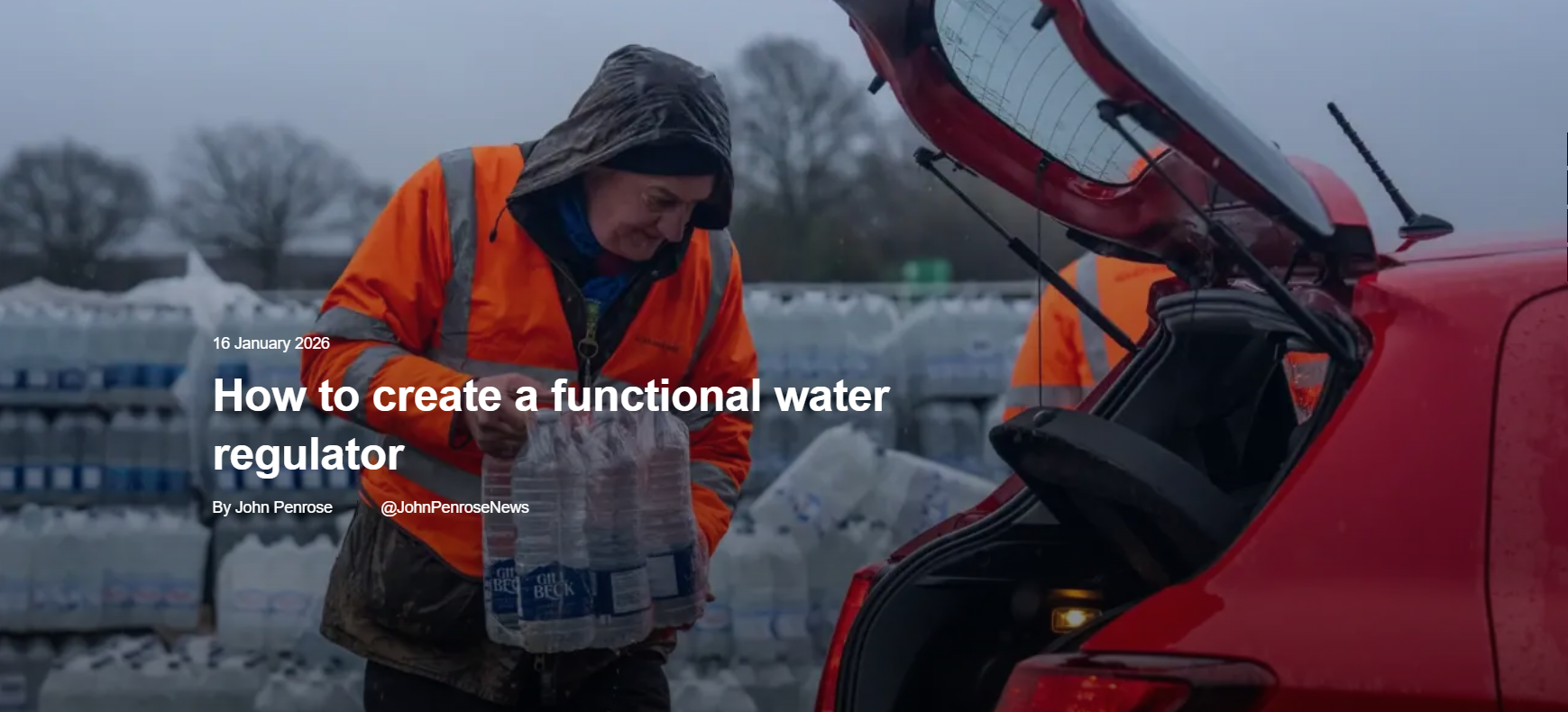
Dry taps and bottled water for customers of South East Water in Tunbridge Wells, Thames Water going bankrupt in slow motion, spiralling bills across the rest of the country and to cap it all, fat cat pay and bonuses for water company bosses. The water industry is about as popular as a burst sewer at the moment.
Even this week’s announcement of an official inquiry into South East Water’s supply problems by water regulator Ofwat looks like window dressing, rather than a genuinely game-changing intervention. The unloved and struggling quango’s death warrant was signed months ago when ministers started consulting on plans to merge it with parts of the equally-unloved Environment Agency. So a slow motion inquiry which won’t finish for years and will probably levy fines that will be passed through to billpayers anyway, looks more like a last-gasp plea for mercy from a regulator trying to prove its worth, rather than anything that customers will sing about.
The chances of merging two poor-performing regulators to create a single good one are vanishingly small, unless we reform how they work at the same time. But there are several key changes which could stop today’s problems from reappearing tomorrow, if only they featured in any of the current plans.
The first is for ministers to give their new water super-regulator a very short list of tough standards it has to enforce. Things like clean water in rivers, lakes and seas to stop sewage dumping; reliable mains water even when the weather is awful; and the lowest possible bills for customers. If the list is longer than three or four goals, the regulator will pick and choose which ones come first, which means some of them won’t happen. And if the tough new standards are outputs (what must be done) rather than outcomes (results which must be delivered), then customers and billpayers will get lots of expensive, box-ticking process compliance rather than the better services we all want.
The next is to force the new water super-regulator to be humble, by making sure they aren’t given any legal powers to tell farmers, water companies, housebuilders or anyone else how to do their jobs. That means letting housebuilders and farmers find the cheapest ways to build homes or raise livestock without polluting local streams and ponds. Or expecting water companies to do deals with landowners and local council highways teams to reduce and slow runoff so their pipes and pumps cope better in storms. If the regulator is confined to checking the results afterwards, instead of approving them in advance, we will create an entire new industry of green innovators creating clever ways for farmers, housebuilders and anyone else to deliver high water standards as cheaply as possible, and save a fortune in red tape costs which currently ends up on customer bills to boot.
But the biggest change should be how the new super-regulator punishes firms that haven’t delivered the tough new water standards properly. Fines are okay for cowboy housebuilders or sloppy farmers, but badly-run water companies can just pass them on to customers in higher bills. At first, regulators like Ofwat tried to solve this by micromanaging how water firms behaved, adding layers and layers of hugely expensive, ever more detailed red tape. But that just made lawyers and advisors enormously rich without fixing the problems of dirty water or skyrocketing bills at all.
Instead of micromanaging water companies, the new super-regulator should auction each one’s operating licence every 5 or 10 years. Rival firms would bid for the right to supply water and sewerage to customers in each area while delivering all the tough new water standards at the same time, and the one who promised the cheapest customer bills would win. The bid contracts would include a small pre-set lease or rent payment for using pre-installed equipment like pipes, pumps or water treatment plants in each area, so current owners wouldn’t lose out. The new licence holders would have to maintain the equipment to make sure the tough new water standards are delivered properly as they promised in their auction bids, and they would earn shares in the equipment ownership for every new piece of kit they added too. Any firm that failed to deliver what it had promised in its bid, whether in too-high bills or dirty lakes and rivers, would lose their license which would be re-auctioned instead.
The results of these auctions would be electric. Today’s slow, expensive, complicated negotiations between Ofwat and water firms would vanish, to be replaced by a quicker, cheaper, simpler process that would instantly uncover who could deliver cleaner lakes and rivers for the smallest customer bills. And all the dry taps and bottled water in Tunbridge Wells would be gone forever.
If you like this idea, you’ll find more details, soundbites and rebuttals about it under How To Save Water in the Policy Thumbnail section of our website
This article is the latest in a fortnightly series of policy proposals published in CapX from John Penrose and the Centre for Small State Conservatives.
Leave a Reply