
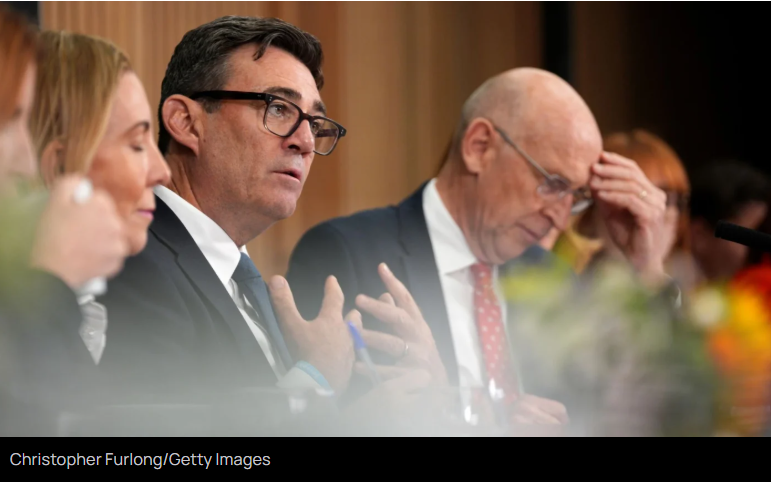
The problem for bright-eyed and bushy-tailed new prime ministers who take over part-way through a Parliament is they start with a king-sized chip on their shoulders. They walk through Downing Street’s door knowing they aren’t the one who won the election mandate they’re inheriting, and needing to defuse whichever political crisis overwhelmed their predecessor too. So they try to make up for it by being hyperactive which, in Andy Burnham’s case, has meant a flurry of promises on everything from cheap bus fares to cutting VAT on household energy bills.
Those kinds of crowd-pleasing pledges don’t come cheap, of course, so ministers are already searching down the back of Whitehall sofas for extra cash. But one of the biggest options is off-limits, because Andy Burnham has – rightly – promised not to increase our already spiralling Government borrowing even further, by sticking with Rachel Reeves’s fiscal rules. It’s a wise move in the month our national debt crashed through the £3 trillion barrier for the first time ever, reducing the risk of a career-ending run on the pound and preventing even-higher interest payments from gobbling up cash that could be used to fund those eye-catching promises he made instead.
Rather than creating fiscal headroom to justify extra Government borrowing and debt, an honest set of figures would reveal the exact opposite
Except that, at the same time as he kissed the ring of international bond markets by pledging fiscal prudence, Andy Burnham had his fingers crossed behind his back. He’s asked his new Chancellor, John Healey, to look for ‘wriggle room’ where those fiscal rules of Rachel Reeves could be stretched to allow more borrowing after all. The most likely wheeze is probably to allow the value of some publicly-owned assets to be set off against debt so the net figure is lower and, magically, there’s extra headroom to justify more borrowing. Clever, eh?
Well… no, not really. The idea only works if ministers massage the figures by leaving some huge and economically-important taxpayer IOUs out of their calculations completely. Things like the future costs of the state pension, which are spiralling because of our ageing population and which any commercial pension or insurance company would have to include in its balance sheet. At over 220% of GDP on its own, it would swamp the value of all those public assets which the Chancellor is eyeing up, and that’s before he includes any of the other working age and retirement benefits in the National Insurance system too. Rather than creating fiscal headroom to justify extra Government borrowing and debt, an honest set of figures would reveal the exact opposite. They’d show the true picture is far, far worse than Andy Burnham thinks. No wonder well-known and respected economic experts like Andy Haldane and Jim O’Neill, who were being touted as economic advisers a few weeks ago to show the new regime wouldn’t go mad with the nation’s credit card, suddenly seem reluctant to sign up.
But, oddly, all this fiscal gloom could offer Downing Street’s latest mid-Parliament arrival a chance to show he is genuinely a new broom. He’s said he wants his Government to mark a decisive break with the past, so why not start by confronting reality? Instead of allowing his ministers to behave like economic ostriches sticking their heads in the sand, he could mandate transparency and honesty so everyone has a true and fair picture of just how tough things are. It would mean including all those missing IOUs in annual government balance sheets of Taxpayer Net Worth as I outlined in CapX a little while ago, together with a long-term pledge to cut the net liabilities by a minimum amount each year until they are gone.
He could legitimately claim this new approach would make Britain greener too. Every time we dig a mine or drill a well we are reducing the store of long-term environmental capital that nature has given us. So we ought to invest the proceeds in things that will last just as long, and which are worth the same or more than what’s been taken. Otherwise we’re just plundering natural resources without leaving our grandchildren anything to show for it.
So a national balance sheet is a great idea in principle, providing ministers don’t use it to paint a lopsided and artificially-optimistic picture to justify extra borrowing and bigger debts. If they do, it’s nothing more than a dangerous con. But if they don’t, the benefits of tougher and more transparent controls of government IOUs would be enormous: interest rates would fall as international investors upgraded their view of Britain’s economic future, growth would accelerate as companies found it easier to invest and the cost of living would fall as things like mortgages got cheaper too. If Andy Burnham or any future prime minister wants an economic legacy that will last, this is where they should start.
If you like this idea, you’ll find more details, soundbites and rebuttals about it under Taxpayer Net Worth in the Policy Thumbnail section of our website
This article is the latest in a fortnightly series of policy proposals for CapX from John Penrose and the Centre for Small State Conservatives.
Leave a Reply