
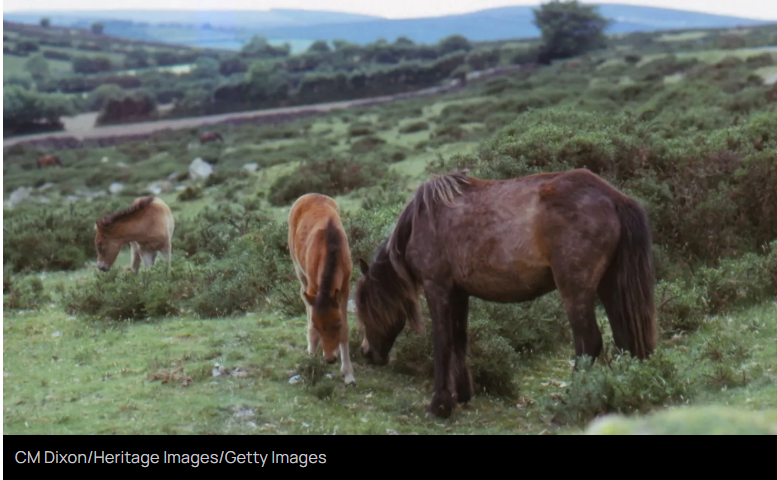
Almost lost between this week’s national mourning (in England anyway) over the World Cup, and the endless Westminster fantasy-football speculation about who’s going to be in or out of Andy Burnham’s first cabinet, was an oh-so-British announcement about Dartmoor ponies.
The endangered breed had been put in further peril by Natural England’s plans to protect fragile moorland habitats, which opponents say would mean culling almost nine in every 10 ponies. Cue outrage from pretty much everyone including Kemi Badenoch and, this week, Natural England quietly slipped out an announcement that it is backing down.
Why are we spending so much more cash on saving the lives of some humans and animals than others?
It isn’t the first time Natural England has run into controversy. It is also the regulator behind the HS2 ‘bat tunnel’, the Hinckley Point nuclear ‘fish disco’ and the spider-protecting veto on building new homes in Ebbsfleet, Kent. Being kind to animals is thoroughly British, but the money Natural England is demanding should be spent to save the life of each bat, fish and spider is miles more than the NHS currently spends on patients needing life-saving medical treatment, which the National Institute for Health & Care Excellence (NICE) says is about £30k for each extra year of human life, since you ask. And why does Natural England think protecting the life of an endangered Dartmoor pony is worth so much less than a rare bat or spider?
It isn’t the only regulator that’s being inconsistent about these things. The amount we are required to spend protecting the life of each person working in a nuclear plant is massively more than anywhere else on the planet, or than we spend protecting people from being hurt in road accidents, or than the NHS spends extending the lives of its patients.
So the Dartmoor ponies are safe for now. Hooray. But their case has uncovered a much bigger, broader problem: why are we spending so much more cash on saving the lives of some humans and animals than others, without realising or understanding why? If the differences were deliberate they might be okay, but they aren’t. Parliament hasn’t debated how much taxpayers should spend saving the life of a fairly-rare bat compared to a very rare fish. Bishops and other church leaders haven’t spoken about the morality of spending more on extending an animal’s life than your or my mum’s when she’s being treated in the local hospital. It’s all random, because we’ve left the decisions to a flotilla of different regulators like Natural England. Each of them has its own objectives, applies different legal standards and doesn’t compare notes with the others, so we shouldn’t be surprised when the result is a dog’s dinner.
Making decisions about life and death on that basis is morally wrong and unfair, for humans and animals alike. Plus it puts regulators in a difficult position by expecting them to take highly political decisions about life or death without democratically-set guidelines from elected MPs and ministers. And it means we could almost certainly save a lot more human and animal lives for less cost if we were more transparently consistent and organised about it.
Fortunately, it wouldn’t take much to straighten things out. Ministers should start by forcing regulators to publish how much they are demanding is spent on saving the lives of people and wildlife at present, so everyone can see which ones are too high or low and Parliament can debate them properly. They’d have to make sure the costs were calculated consistently, and independently audited so regulators couldn’t mark their own homework, but that’s pretty much it.
Once we’ve uncovered what regulators are currently demanding is spent to protect each human and animal life in different situations, and Parliament has decided whether they’re right or wrong, ministers should clip regulators’ wings by adjusting their powers and guidelines to deliver a new, democratically-valid set of values instead. It will be fairer, more consistent, more transparent and more predictable. Most important of all, it will save more lives for less money. No more bat tunnels. No more fish discos. And, as a result, it will keep regulators like Natural England out of hot water more successfully in future too. What’s not to like?
If you like this idea, you’ll find more details, soundbites and rebuttals about it under A Matter of Life & Death in the Policy Thumbnail section of our website
This article is the latest in a fortnightly series of policy proposals for CapX from John Penrose and the Centre for Small State Conservatives.


Leave a Reply