It’s been a wild summer already. What better way to see out the season than with a good book? We asked CapX’s editors and contributors what they’re packing for the holidays.
Robert Colvile, CapX Editor-in-Chief
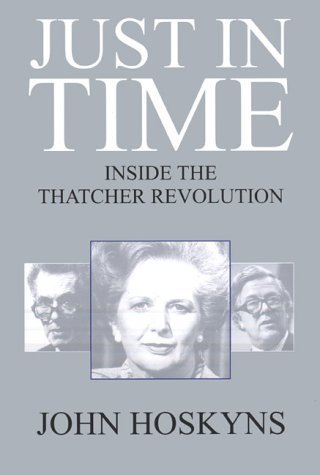
Andy Burnham’s choice of Chancellor means that ‘Go Big’ by Ed Miliband can, fortunately, go back on the shelf. A very high shelf. In its place, I’ll be reading ‘The Impossible Bomb’, by Gareth Williams, about the British scientists who made the Manhattan Project possible, but were written out of history by the Americans – and Britain’s own Christopher Nolan. I’m also looking forward to Andrew Ross Sorkin’s new-ish book on the crash of 1929, having devoured his history of the 2008 crisis. And unusually for me, I plan to do some re-reading – of Ian Leslie’s ‘John & Paul’, which has been haunting my imagination ever since I finished it last year.
Liam Halligan
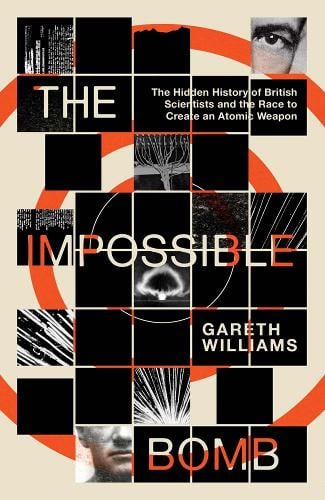
‘Just in Time – Inside the Thatcher Revolution’ by John Hoskyns
Given that I’ve been appointed Director of the Centre for Policy Studies from mid-September, this is essential reading. Businessman turned political strategist John Hoskyns joined the CPS during its early days – back in the mid-1970s. ‘Just in Time’ is a no-holds-barred account of how a think tank’s ideas can successfully transform an entire nation’s political economy, with huge national and international implications. Hoskyns helped turn the CPS into the intellectual powerhouse that engineered Thatcherism – and rescued Britain from the torpor of the late-1970s. The book is full of drama, human endeavour – and lessons for today.
‘Stoner’ by John Williams
Stoner is a novel released to little acclaim which, through word of mouth, became an unlikely modern classic. Spanning the first half of twentieth century America, it tells the story of William Stoner, an unassuming academic at an unremarkable mid-Western university – elevating an ordinary, relatively humdrum life story into a profound and universal reflection on human existence. Featuring masterly prose, genuine emotional depth and an almost shattering examination of dignity in the face of failure, this relatively slim volume is one of the most powerful novels I’ve ever read.
‘Nobody’s Perfect’ by Anthony Lane
Anthony Lane has for many years written film reviews for The New Yorker – and is one of the world’s most influential and respected film critics. He is also the husband of my friend, fellow Telegraph columnist and Planet Normal Co-Host Allison Pearson – so I’m lucky to know him personally.
‘Nobody’s Perfect’ brings together some of Lane’s reviews from his first decade with The New Yorker, beginning in 1993 – and, as a collection, genuinely defines the standard for modern film and cultural criticism. His writing combines formidable literary erudition (he’s a Cambridge English grad and leading authority on T.S. Eliot) with sharp, accessible wit.
I love film and always learn a huge amount from each of Lane’s reviews – which bridge high and low culture, treating popcorn blockbusters and fine art with equal critical seriousness and, where warranted, disdain.
From ‘Indecent Proposal’ to ‘Remains of the Day’, from ‘Pulp Fiction’ to the Russian Stalin-era classic ‘Burnt by the Sun’, Lane nails it every time – and this brilliant volume contains plenty of penetrating book reviews and profiles too, including Julia Roberts and Alfred Hitchcock. A superb addition to any bookshelf – and a perfect companion for those who like lazy, film-watching sunny afternoons.
Marc Sidwell, CapX Editor
I can’t recommend ‘Vermeer: A Life Lost and Found’ by Andrew Graham-Dixon enough. It will transform how you look at Vermeer’s paintings, but it’s much more than that – a portrait of a country traumatised by war and sectarian violence building a peaceful, innovative alternative, with the help of pioneering ideas about religious and personal freedom. This August, I’m looking forward to briefly shaking off politics while I read ‘Taylor’s Version’ by Stephanie Burt, on the poetic genius of Taylor Swift, then getting energised for the autumn with Cate Hall’s high-agency manifesto, ‘You Can Just Do Things’.
If you need more reading inspiration, you can listen to my recent interviews for The Capitalist with Adrian Wooldridge, Steve Davies, Matthew Elliott, Jeremy Hunt and Zoe Strimpel on their brilliant new books. Or for a glimpse of the sci-fi future rushing towards us, turn to the CapX archive – where you can read a taster of Rainer Zitelman’s ‘New Space Capitalism’. And while you’re there, don’t miss ‘The Gaslight War’, by Adrian Tchaikovsky (author of ‘Children of Time’), an unsettling short story about a robot war that isn’t quite what the news footage claims.

Oscar Gill-Lewis, CapX Deputy Editor
I will be reading Rachel Ferguson and Marcus Witcher’s new book, ‘Black Liberation Through the Marketplace: Hope, Heartbreak and the Promise of America’ this summer, to learn about the power and importance of civil society. Mutual aid societies and churches have played an important role in much of history, and it will be interesting to learn how they have helped historically oppressed groups, specifically in the American context.

Chloe Walsh, CapX Intern
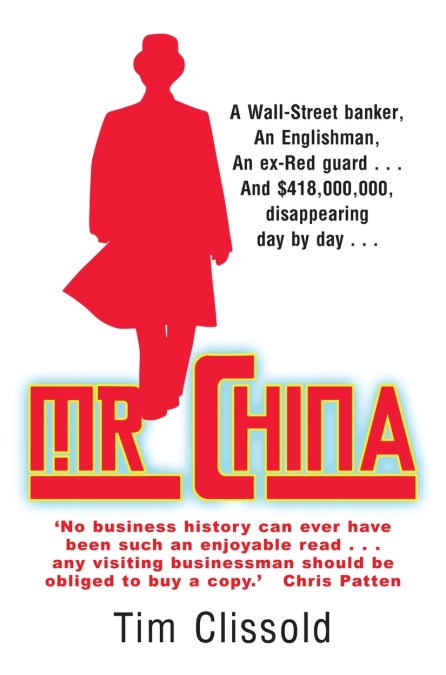
I’ve recently finished ‘Mr China’ by Tim Clissold, set in a time when the West looked to invest in developing China, chasing the fortune of the century. It takes place just as Deng’s liberalisation set off China’s industrial boom, when a Wall Street banker and his team aimed to become the next J.P. Morgan – buying up Chinese factories along the way. It’s almost hard to imagine how far behind China was back then, when the two biggest economies of today weren’t even seen in the same universe. The rules were written differently for Westerners, and watching more than $400 million ride on that is almost stressful to read – but it’s told with a real sense of humour. You start to realise how rapid China’s industrialisation was, from factories that could barely produce working parts to leading the world in EVs.
This summer I’m looking forward to reading ‘The War Below’ by Ernest Scheyder, a recommendation from my professor. It looks at the fight behind going green, following the battles over individual mines and whether sustainability is really the way forward for them. Lastly, as I graduate with my degree, ‘That Which Is Seen and That Which Is Not Seen’ by the economist Frédéric Bastiat feels will be a fitting send off. It’s a short piece from the 1850s, all coming down to one question, is breaking a window good or bad for the economy.
Karl Williams, Research Director, Centre for Policy Studies
One of my final tasks before leaving the CPS at the end of August will be drafting the reading lists for the third cohort of Thatcher Fellows. These lists will focus on specific topics: examples from the last two years include ‘The New Right, Then and Now’, ‘Free Markets and the Conservative Party’, ‘Anarchy in the UK?’, ‘The Growth of the Regulatory State’ and ‘Political Journalism and the Lobby’.
However, in the meantime I’ve set the new Thatcher Fellows some background reading for the summer, including Duncan Weldon’s ‘Two Hundred Years of Muddling Through’ (a superb canter through modern British economic history), F.A. Hayek’s ‘Individualism and Economic Order’ (containing some of Hayek’s key essays on knowledge and the market economy) and Andrew Gamble’s ‘The Free Economy and the Strong State’ (the definitive analytical account of the Thatcherite project, written from an avowedly Gramscian-Marxist perspective).
For myself, I am looking forward to reading ‘King of the World’, Philip Mansel’s mammoth biography of France’s Louis XIV. I’ve often felt I was born in the wrong era and so have missed my true calling as a Williamite polemicist in 1690s England, but at a time when Labour seems intent on dragging Britain back into the EU’s regulatory orbit, it is worth recalling to mind the twin, sempiternal perils of universal monarchy and French perfidy.
On a lighter note, I recently enjoyed reading Harry Turtledove’s alternative history novel, ‘How Few Remain’, about a world in which the Confederate States of America won the Civil War and achieved independence in 1862. Set in the 1880s, the book is the story of the fictional Second Mexican War, told through the eyes of historical figures whose fortunes have turned out rather differently in this timeline, including ex-president and Marxist agitator Abraham Lincoln, San Francisco newspaper editor Samuel Clemens (Mark Twain), abolitionist and former slave Frederick Douglass, Confederate General Thomas ‘Stonewall’ Jackson, Prussian military attaché Alfred von Schlieffen (of Schlieffen Plan fame) and Union cavalry commanders Theodore Roosevelt and George Armstrong Custer. I am looking forward to reading the sequel, which begins in 1914…

Daniel Hannan
‘Statesman of Europe: A Life of Sir Edward Grey’ by T. G. Otte
A beautifully written biography of Britain’s longest-serving foreign secretary which, in telling his story, presents as powerful and convincing an account as you will find of why the First World War happened and why the UK was dragged into it.
‘Goodbye, Dr Banda: Lessons for the West From a Small African Country’ by Alexander Chula
A young Oxford classicist taught in a Malawian school established to ensure that the elite of that country would get a firm grounding in Latin and Greek. He tells Malawi’s story in exquisite prose and, in doing so, gently demolishes the assumptions on which modern anti-colonialism rests.
‘The Anxious Generation: How the Great Rewiring of Childhood Is Causing an Epidemic of Mental Illness’ by Jonathan Haidt
Every parent ought to read this. And if you have teenage kids, try to get them off their phones for long enough to read it, too.
‘The Rage of Party: How Whig Versus Tory Made Modern Britain’ by George Owers
A familiar-seeming culture war sundered England between 1690 and 1714. Everything became about party loyalties. The period is generally neglected by all except specialist historians, but here is a book for the general reader, full of such colourful details that you keep having to remind yourself it is not a novel.

John Penrose
I wish I could pretend my summer reading is full of self-improving, heavyweight literature: the sort of humblebrag list that makes its author look good and leaves everyone else faintly in awe. But, truth be told, I spend the rest of the year reading serious and often turgid public policy stuff and so my plane and poolside selections are the lightest, slightest souffle you can imagine.
That means anything by P.G. Wodehouse, Oscar Wilde, Noel Coward or Stephen Fry (but only one per holiday, there’s only so much elegantly-mannered social wit I can take).
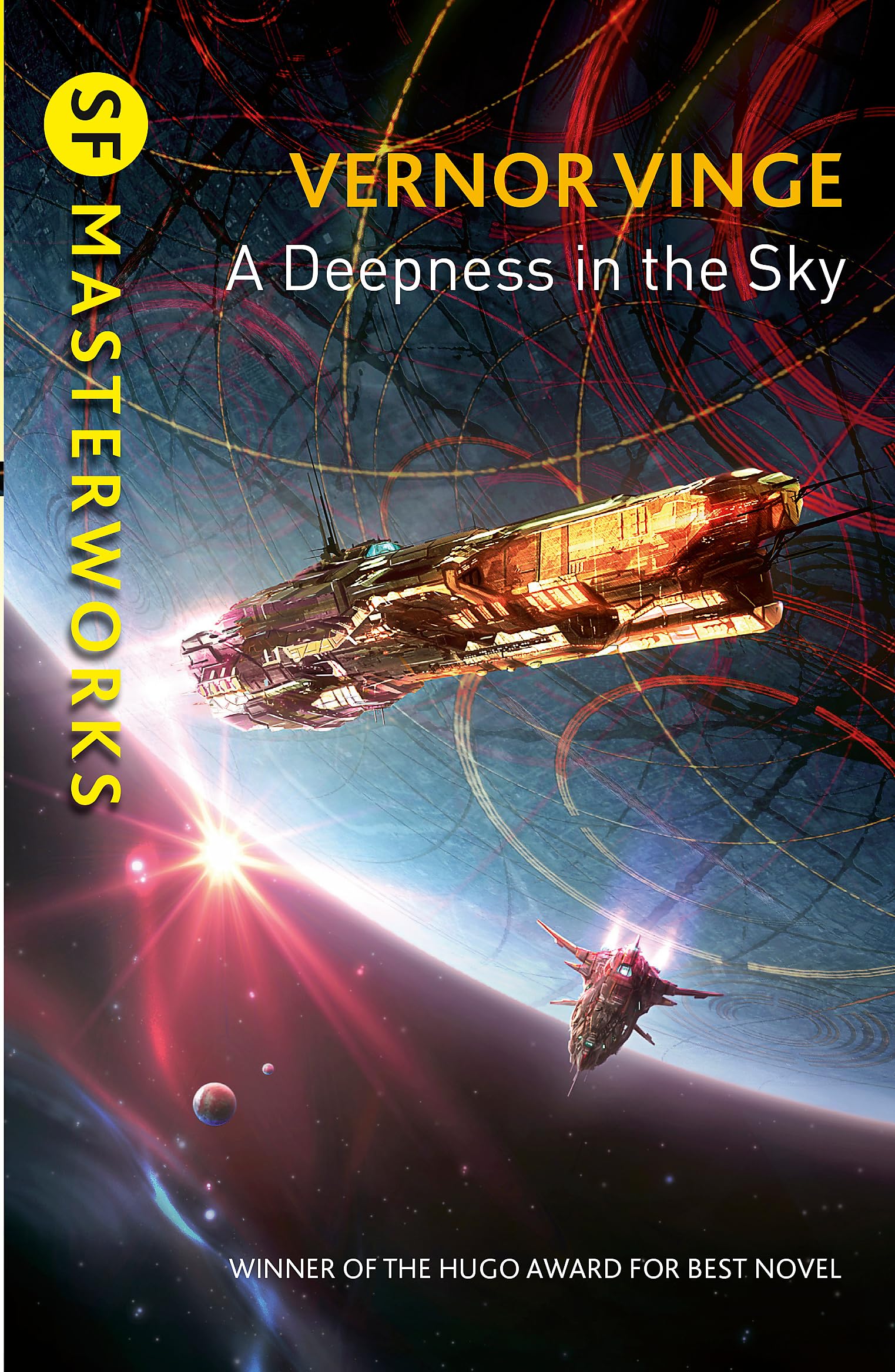
Then a piece of escapist science-fiction to distract me from the real world’s plodding problems – my current favourite is Vernor Vinge’s ‘A Deepness in the Sky’ – and finally something more earth-bound but equally speculative, which this year means William Gibson’s ‘The Peripheral’ (currently being turned into a TV series for Amazon if you’re interested) after I enjoyed his ‘Pattern Recognition’ a few years ago.
But the ‘Odyssey’ in Homer’s original Greek is staying at home – I might watch the film on the plane instead.
Leave a Reply