
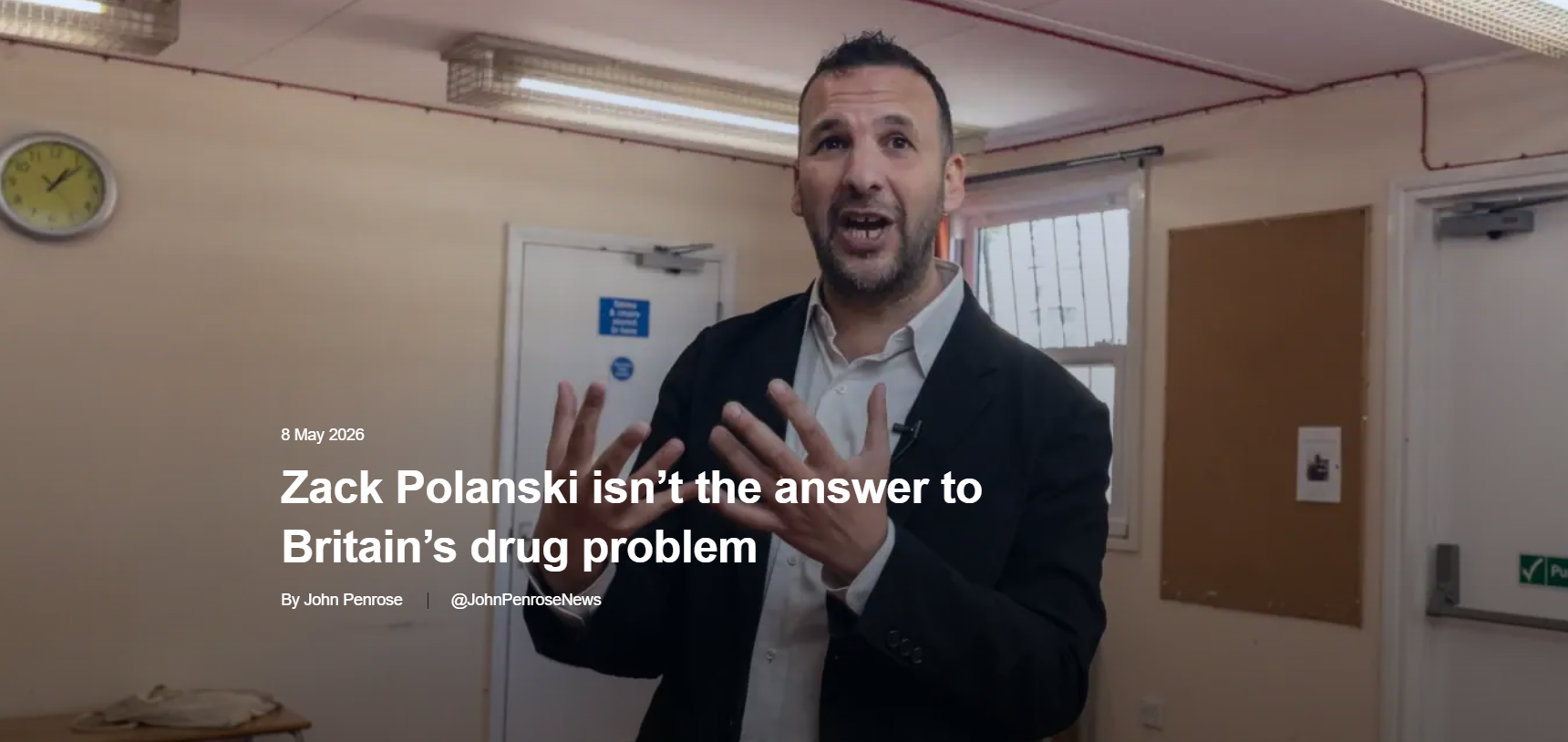
Even though the final local election results won’t be declared for a while yet, it’s clear there are glum faces in our two traditionally-biggest parties, an enormous trademark grin from Nigel Farage at Reform UK, and that Zack Polanski’s Greens are on the march.
The populist parties aren’t gaining because they discovered a magical fountain of brilliant new policy ideas that no one had thought of before. Green policies like slashing defence spending, scrapping the nuclear deterrent and admitting more asylum seekers have never won British elections, and haven’t suddenly become wildly popular now. The engine driving Reform and the Green Party support runs on vibes and anger rather than any earth-shattering new policy ideas.
Except Polanski may be doing the country an unexpected favour in one area at least: the arid and untracked political desert of drugs policy. His proposals to decriminalise them make as much sense as the hallucinations of someone tripping on acid, but he’s right that Britain’s drugs laws have been failing horribly for years. They were introduced in 1970 and the number of addicts started rising fast immediately afterwards. We now have 300,000 addicts taking opiates and cocaine, with over 2.5 million more who take other kinds of illegal drugs each year too.
All this addiction costs taxpayers over £20 billion every year in drug-related crimes, wasted lives, lost economic growth, extra costs for social services, benefits payments and long-term medical treatments. That kind of money could increase our defence spending by a third, build lots of new hospitals or slash poverty. Half of our murders and half of our thefts are linked to drugs, and people with serious drug addiction take up one in three prison places. We can’t go on this way, and yet no one expects things to improve. Police and customs are clear that drugs seizures and arrests only disrupt supply for a few days or weeks before new dealers and products appear to fill the gaps.
So Polanski is right that our drugs laws are a national scandal and need to change. Even though his answer would take us from the frying pan into the fire, he’s right that we can’t carry on pretending everything is fine while this slow-motion disaster unfolds.
The odd thing is, we’ve had laws that deal with other dangerous chemicals like explosives, poisons, prescription medicines or radioactive isotopes for years, and they work pretty well. If the number of people blowing themselves up or poisoning their neighbours had been rising a tenth as fast as addiction, every radio, TV and online news channel would be full of people hyperventilating about a national scandal. So why haven’t we developed new, better laws to control addictive drugs as successfully as the long-established ones that protect us from all those other dangerous chemicals too?
It’s partly because there’s still a social stigma around addiction that makes drugs hard to discuss properly, and partly because politicians are petrified that suggesting changes will get them labelled as soft on drugs, even if a new approach would save thousands of lives.
We shouldn’t underestimate the power of all that political fear and social stigma: those twin obstacles have effectively blocked us saving lives and livelihoods for over half a century. So we need a countrywide, cross-party consensus that the costs of addiction for our families, our neighbours, our communities and our society have got too high, and must stop.
The devil will be in the detail of designing new laws that work better than our current versions, of course. The drafting could be done by a commission of scientists and other experts, or by a citizens assembly, or even by both working in parallel. What’s crucial is that they have cross-party support from all the main political leaders from day one, and are given a mission to improve lives by slashing the numbers of people getting addicted in the first place, which will take legalisation off the table, as well as helping people who are already hooked to lead healthy, proudly-independent lives. Once the drafting is finished, the work would go to Parliament for full democratic debate as the new laws are introduced.
Once the new laws take effect, the biggest losers will be the organised crime lords who currently profit from addicts’ misery, as a large and extremely violent part of the UK’s black economy is slashed in size. Crime will fall, and so will the deaths, injuries and long-term health problems that addiction causes. Pressures on the NHS will drop, along with the benefits bills, and tax revenues will rise as former addicts become able to get or keep a job, look after their children and keep up payments on their homes.
It will take courage to change, but the sheer scale of misery and costs that addiction inflicts on us all is too awful to ignore. In the last 50 years, we have conquered stigma, shame and fear on everything from abortion to disability. How can we still look the other way on addiction?
If you like this idea, you’ll find more details, soundbites and rebuttals about it under We Need To Talk About Addiction in the Policy Thumbnail section of our website
This article is the latest in a fortnightly series of policy proposals by John Penrose and the Centre for Small State Conservatives, published in CapX
Leave a Reply